The Journey of a Tiny Shepherd Who Found His Place in the Nativity
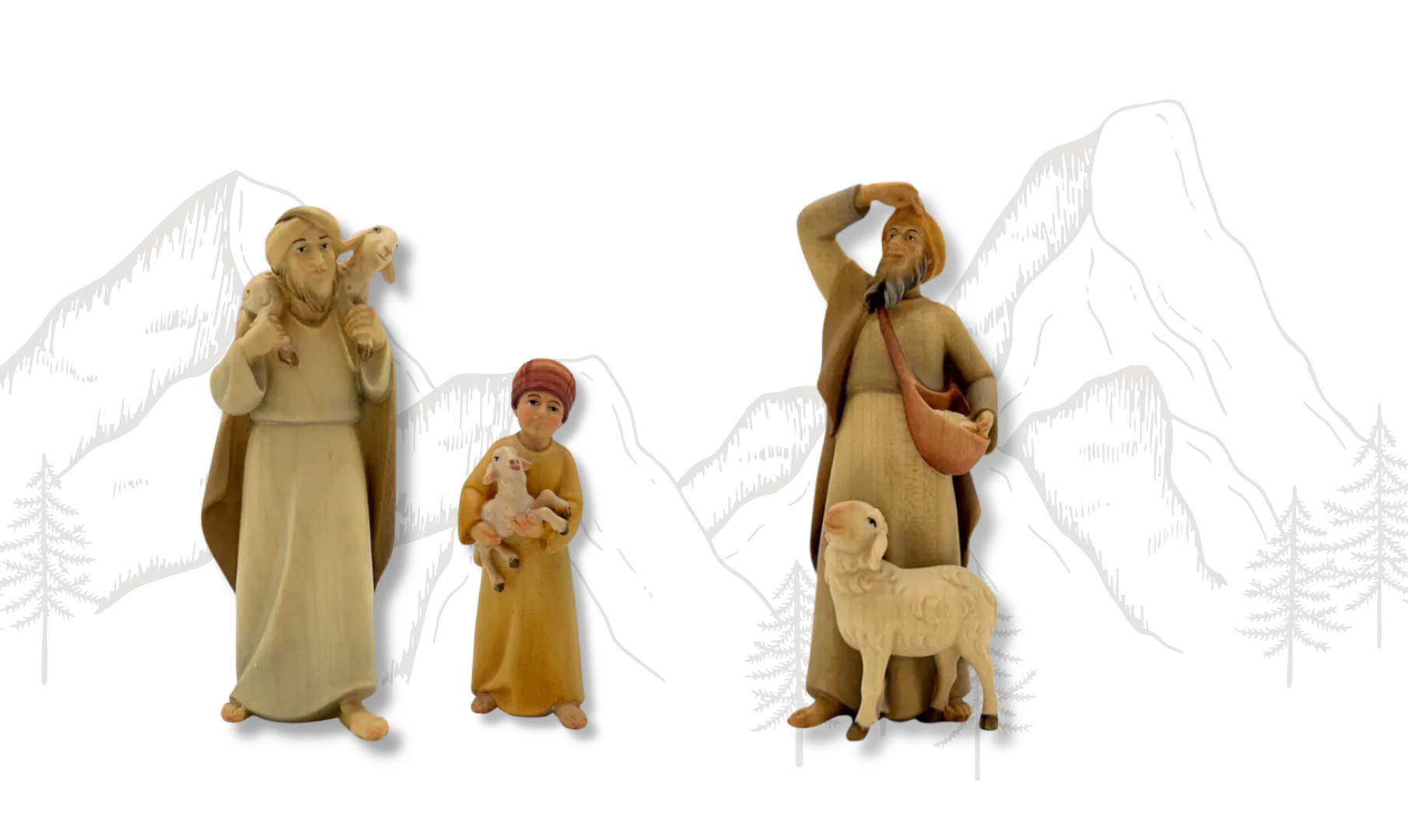
There is an image that is often overlooked by most others. It's not the kings dressed in their golden garments. Nor the shining angel standing on the roof of the stable. Not even the Holy Family, which is the main focus of everything. It's the shepherd, little and old looking, standing a bit away from others, hugging a lamb to his chest.
He never intended to be in the story. He just caught the sound of something in the night and went after it. That silent step of going after something is what probably makes him the most sincere character in the whole setting. And if the shepherd is made out of one of the best mountain maples by the same family who have been woodworking for many generations, like the nativity figures from South Tyrol, his presence carries a weight far beyond his size.
Born From the Mountain, Shaped by the Hand
Every iconic personality starts off as a plain block. Nothing more. No face. No pose. No story at all. In the woodcraft centers of South Tyrol, especially in the Val Gardena area, a woodcarver grabs a tool and starts absorbing what the timber intends to turn into. This is not a poetic exaggeration. It is how the custom has been functioning for centuries.
The wood's fibers direct the knife. The timber's natural shapes propose the head's inclination, the knee's bending, the figure of a man who has been walking all night through the cold fields, and the weight of a man. By the time the shepherd comes out, he is not produced. He is found.
The Night He Left Everything Behind
Picture the shepherd before the story is told. He has a fire, his flock, and the daily routine that demands little from him and offers little in return. Then the heavens open unexpectedly. Light floods the area where there should be no light. A voice delivers a message in a place where no one is supposed to be talking. And he leaves.
Not because he fully comprehended or believed the story. Not because he was personally selected or the only one capable. He went because the very core of his being knew that he would not get another chance for this moment. That gut feeling, that readiness to abandon the warm fire and head to the unlit area with a light, is what the tiny shepherd figure symbolizes every time he is part of a nativity scene.
The Road Is Long and the Night Is Cold
The path to stability is quite a long one. The shepherd has to walk in the dark. The ground is very uneven. The lamb is becoming heavier in his arms as the shepherd covers each mile. There is no map. Only the light ahead and the decision that gets renewed at every hard step to continue moving towards it.
This is the part of the shepherd's story that most directly addresses the people who set him in their nativity scenes every year. His journey is a reflection of theirs. The long periods of uncertainty. The times when one doubts. The heaviness that one feels when carrying something very precious through the difficult terrain. He gets it because he has been through all of it. And yet he walks.
He Arrives, and the Stable Receives Him
When the shepherd finally reaches his destination, he does not arrive as a hero. He arrives as a witness. The wooden manger stable that receives him is not a palace. It is rough timber and open sides and the smell of animals and hay. It is exactly the kind of place a shepherd would recognize, which is perhaps precisely why he was invited.
He kneels, or stands with his head bowed, and he looks at the child in the manger with an expression that the finest carvers of South Tyrol have spent lifetimes learning how to render in wood. It is not triumph. It is not relief. It is something quieter and truer than both. It is the face of someone who followed a light through the dark and found that the light was real.
The Hands That Made Him Remember Too
To hold a hand-carved shepherd figure is to hold the memory of the hands that made him. In the Kostner nativity figures catalog, each shepherd is carved from Bergahorn, mountain maple, a wood prized for its fine grain and its ability to hold the subtle expressions that make these figures so emotionally alive.
The carvers who shape these figures are not merely craftsmen in the technical sense. They are storytellers working in three dimensions, passing down not only a skill but a way of seeing. When you place a Kostner shepherd in your nativity scene, you are placing into your home a figure that carries within it the faith and the craft of an entire community across many generations.
Where He Belongs Has Always Been Here
The shepherd does not stand at the center of the nativity scene. That place belongs to the Holy Family. He stands at the edge, slightly to the side, in a posture of reverence rather than ownership. And yet without him, the scene feels incomplete.
As often reflected in the Kotner nativity figures catalog, he represents every ordinary person who has ever been called toward something extraordinary and had the courage to respond. He belongs in the scene not because of his importance but because of his willingness. And in that willingness, he becomes one of the most important figures of all.
A Figure for Every Home, a Story for Every Heart
The small shepherd boy has been on a great journey in search of his home. His path from the mountain forests of South Tyrol to the hands of the carvers, from the workshop to the shelf in your home is long one not only in miles but really in meaning as well. Allow him to be set thoughtfully.
Give him a space to stand. Let him be a constant reminder, each time your eye lands on him, that really the deepest journeys are those which begin only by one exposing themselves to the unknown, by the one step of, in a way, allowing oneself to simply be led by a light in a rather unfamiliar night.
Frequently Asked Questions
Q1: What makes South Tyrolean shepherd figures different from other nativity figures on the market?
South Tyrolean shepherd figures are hand-carved from premium hardwoods such as mountain maple and hand-painted by skilled artisans who have trained within a living craft tradition that spans centuries. The level of expressive detail in the faces, postures, and gestures of these figures is simply not achievable through mass production, which is why they are regarded as among the finest devotional art objects in the world.
Q2: How should a shepherd figure be positioned within a nativity scene?
Traditionally, shepherd figures are placed to the sides and slightly behind the central Holy Family grouping, as if approaching the manger in a posture of reverence and wonder. Varying the heights of figures by using small stones or wooden platforms creates a sense of movement and narrative depth that makes the overall scene more visually compelling.
Q3: Are hand-carved nativity figures suitable as gifts for occasions other than religious celebrations?
Absolutely. A hand-carved shepherd figure or any figure from a quality South Tyrolean nativity set makes a deeply meaningful gift for housewarmings, milestone birthdays, & baptisms. Their timeless craft quality and resonance make them appropriate for any occasion.
Q4: How do you care for hand-painted wooden nativity figures to keep them looking their best?
Store figures wrapped in soft cloth in a cool and dry location when not on display. Keep them away from direct sunlight during both display and storage periods. If the wood appears dry, apply a very light coat of beeswax polish to nourish the grain without affecting the surface.
Q5: Can shepherd figures from different series within the same brand be displayed together? In most cases, figures from different series within the same brand can be displayed together, provided their scale is compatible. It is worth checking the figure heights listed in the product descriptions to ensure visual harmony across the scene.